
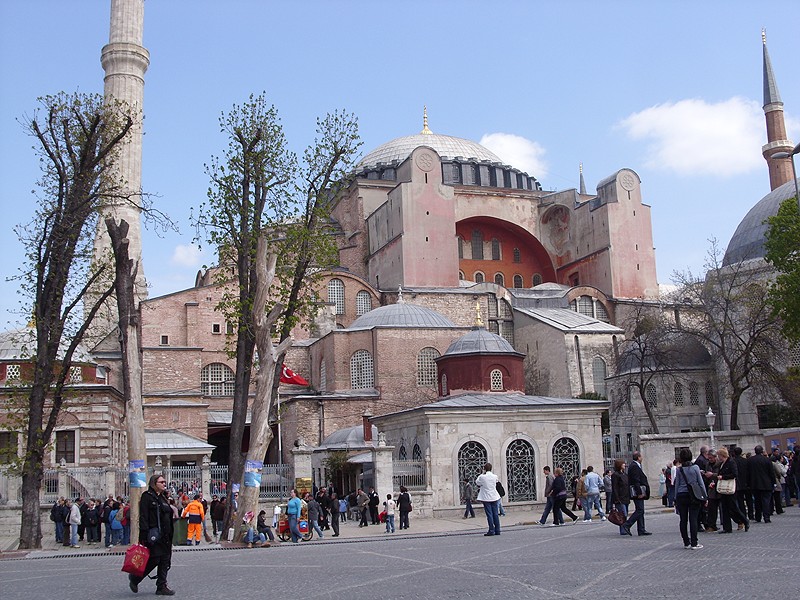
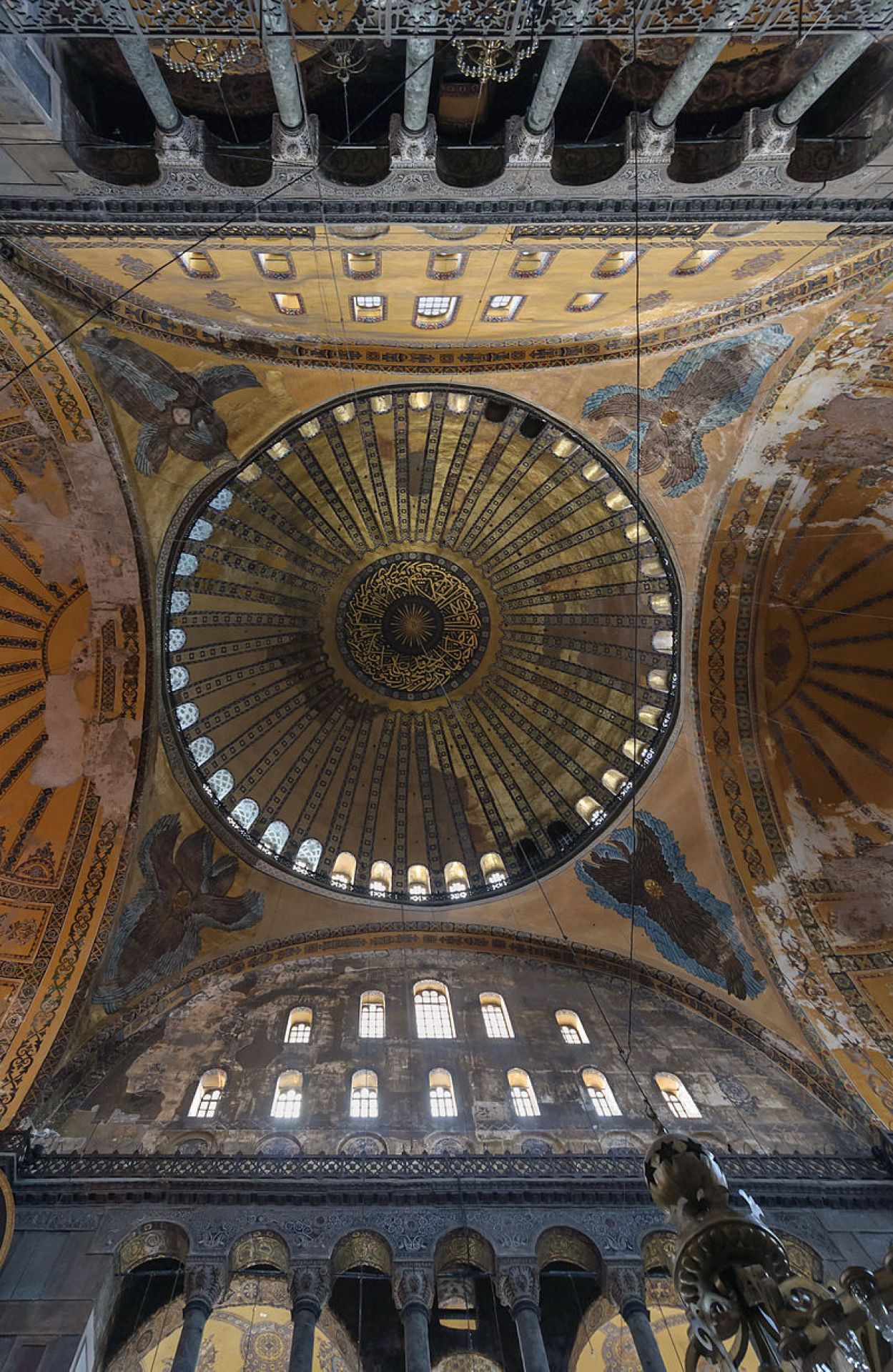
For centuries, Hagia Sophia was one of the world’s greatest places of Christian worship, renowned not only for its magnificent architecture but also for its extraordinary acoustics. As WORLDteen writes:
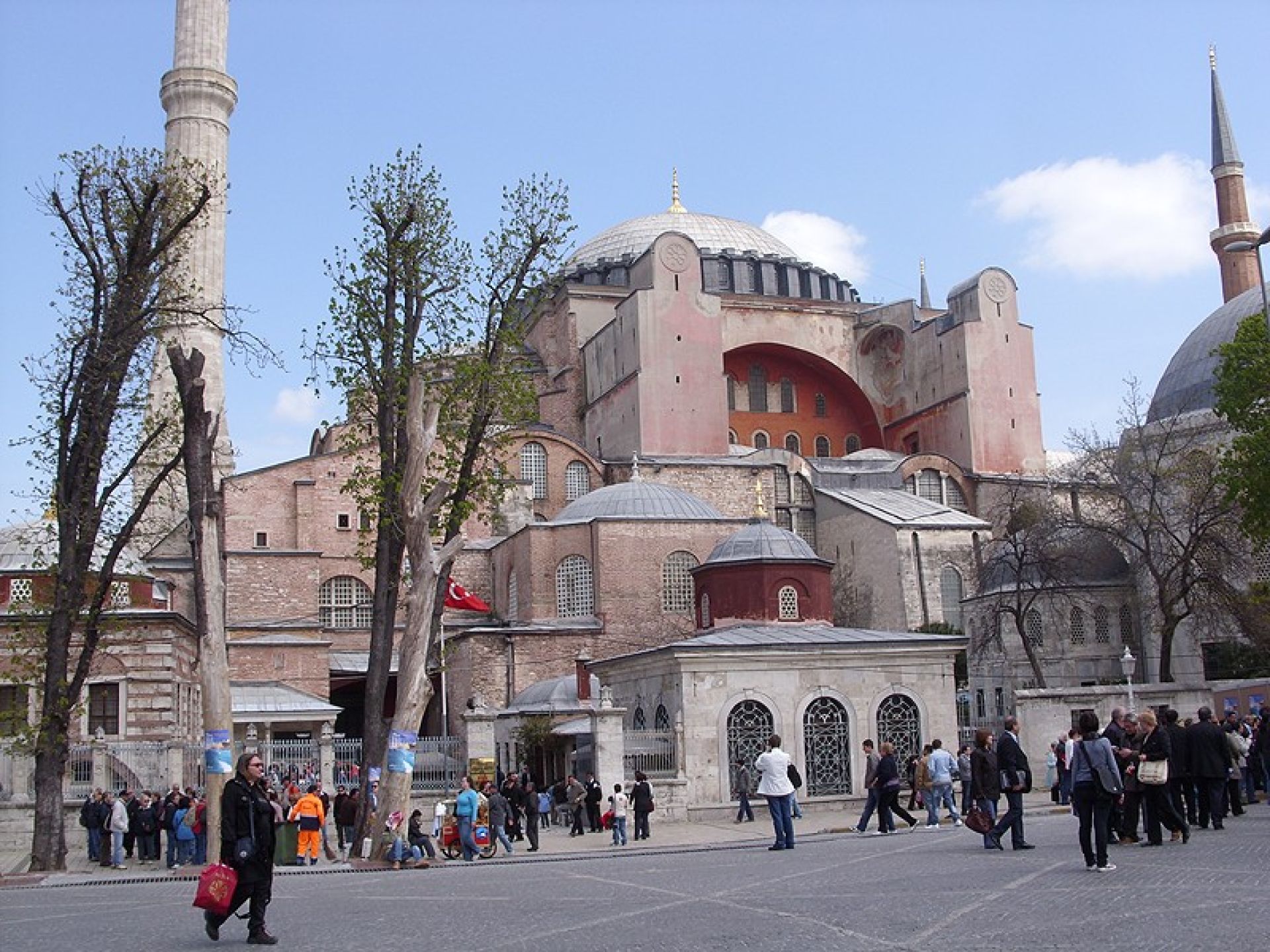
“Sadly, true Christian worship in the Hagia Sophia was silenced long ago. In 1453, the Ottoman Empire conquered the city of Constantinople. The Ottomans converted the Orthodox Christian cathedral into a mosque. In 2020, a presidential decree in Turkey reclassified Hagia Sophia as a mosque once again.” (WORLDteen)
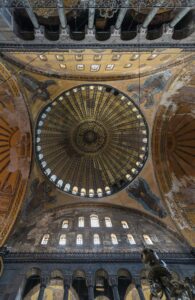
Although its religious function has changed over time, Hagia Sophia remains one of the most remarkable acoustic spaces ever created.
The Unique Acoustics of Hagia Sophia
According to Dr. Turgut Erçetin (Turkish composer, sound researcher and former tanford University researcher), Hagia Sophia possesses one of the longest reverberation times ever measured in a historic building:
“For a good speech perception, the space should be ideally able to deliver lossless information from the source to the receiver (listener). Therefore, acoustic peculiarities such as early reflections, late reverberation or noise become integral. It was already known before our research that Hagia Sophia has a long reverberation time, which can reach a peak of 12 seconds at frequencies in the range of 250–500 Hz.” (Dr. Turgut Erçetin)
Dr. Erçetin further explains:
“Hagia Sophia has not only long late-field reverberation but also a relatively long-lasting Early Decay Time (EDT). The reflective character of the dome and the way in which the cupola diffuses sound create a unique aural experience. We also inferred that the reflected sounds sustained by the interior generate harmonics that gradually evolve from dissonance to consonance. Moreover, clarity index measurements (C50) suggest that the interior was not designed primarily for speech.” (Dr. Turgut Erçetin)
Dr. Erçetin completed his doctoral studies in composition at Stanford University. His work combines musical composition with architectural acoustics, investigating how sound is perceived within historic spaces such as Hagia Sophia.
The Danish CAHRISMA Project – Pioneers in Digital Acoustic Reconstruction
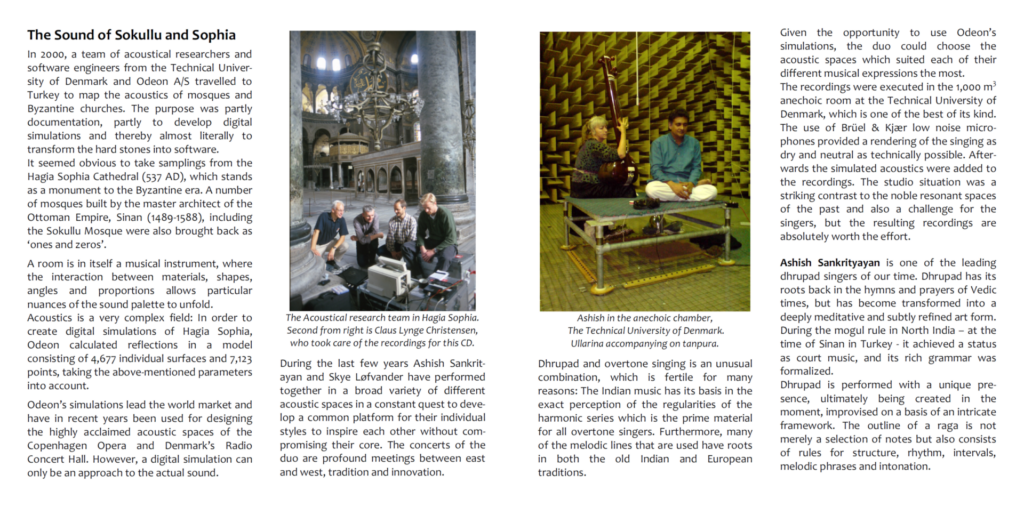
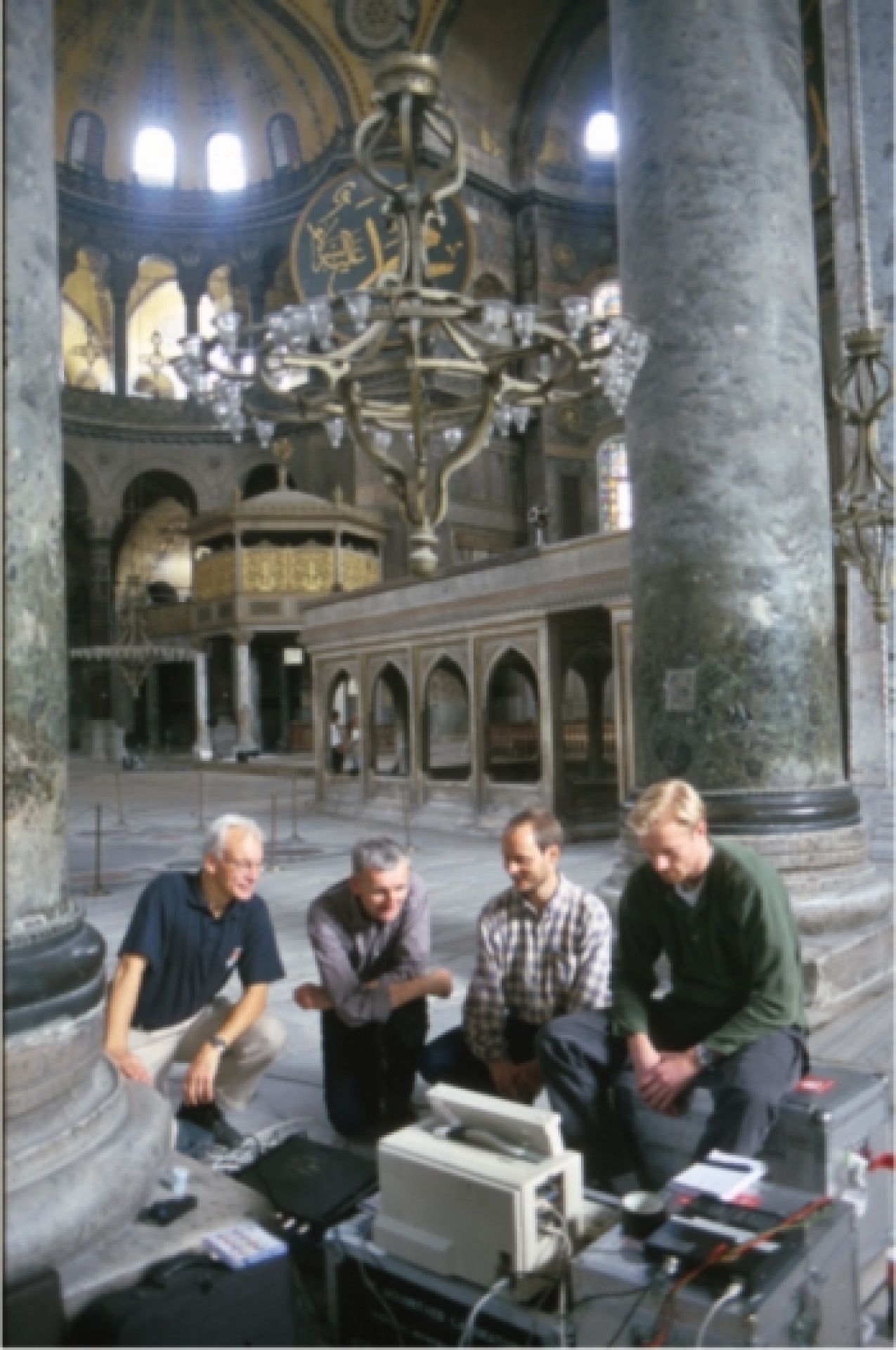
The Danish team of the CAHRISMA project were pioneers in the digital reconstruction of the historical acoustics of Hagia Sophia. Using the ODEON acoustic simulation software, they recreated the building’s unique sound environment and made it possible to experience its historical acoustics digitally.
Their groundbreaking work combined architectural research, acoustic measurements, computer modelling and auralisation. The recordings were produced by ODEON A/S at DTU Science Park, setting an important milestone in the digital preservation of Europe’s acoustic cultural heritage.

Skye Løfvander: Singing in a Virtual Hagia Sophia
Danish singer Skye Løfvander, who participated in the recordings, describes the extraordinary contrast between performing in an anechoic chamber and experiencing the reconstructed acoustics of Hagia Sophia:
“There is a very interesting relationship between singing and church acoustics in particular. This magnificent space of Hagia Sophia was enormous, hundreds of years ahead of its time in terms of size and building technique. More than 10,000 people could gather inside, not only for religious services but also for the emperors’ coronations.” (Skye Løfvander)
He continues:
“The recordings were made in a huge anechoic studio where every wall, the ceiling and the floor were covered with sound-absorbing wedges to eliminate all reverberation. This is the complete opposite of singing in a highly resonant space such as Hagia Sophia.” (Skye Løfvander)
Reflecting on the experience, she concludes with a memorable comparison:
“Singing in an anechoic room could be likened to walking through deep snow, whereas singing in Hagia Sophia is like skiing down a beautiful mountainside.” (Skye Løfvander)
Her observations vividly illustrate both the artistic challenge of the recording process and the pioneering achievement of the Danish CAHRISMA team in digitally bringing one of the world’s greatest acoustic spaces back to life.
The project CAHRISMA, Acoustics in ancient church, Hagia Sophia.
Source and receiver positions (for the auralisation) of the Hagia Sophia
Recordings by Odeon/AS, DTU Science ParkRecordings by Odeon/AS, DTU Science Park
Pictures: Wikimedia, DTU Orbit
Acoustic research on the Hagia Sophia by the Stanford Team and its project “Icons of sound”.
Editor: Mila Zaharieva-Schmolke