
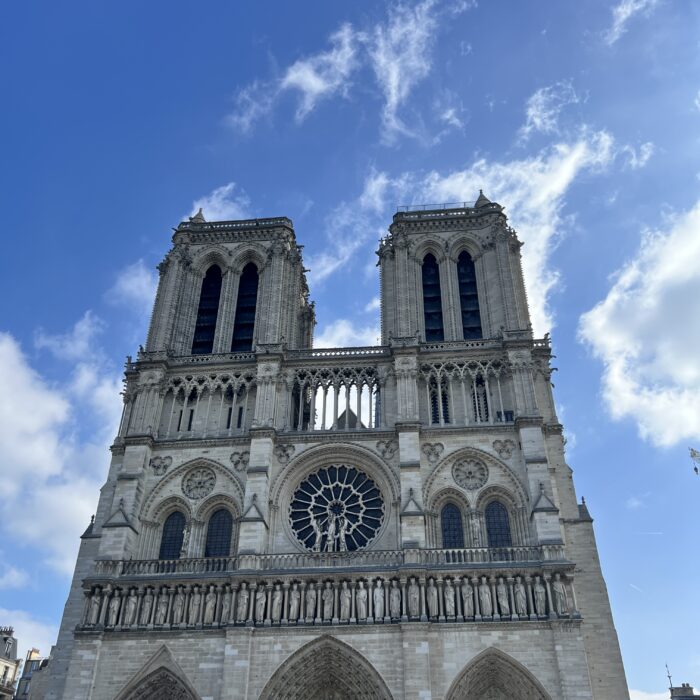
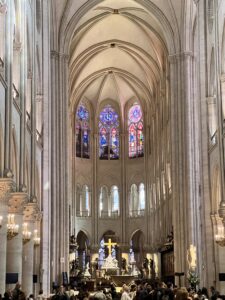
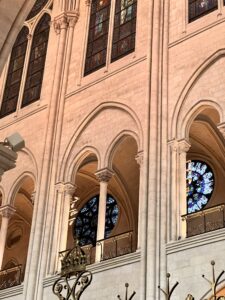
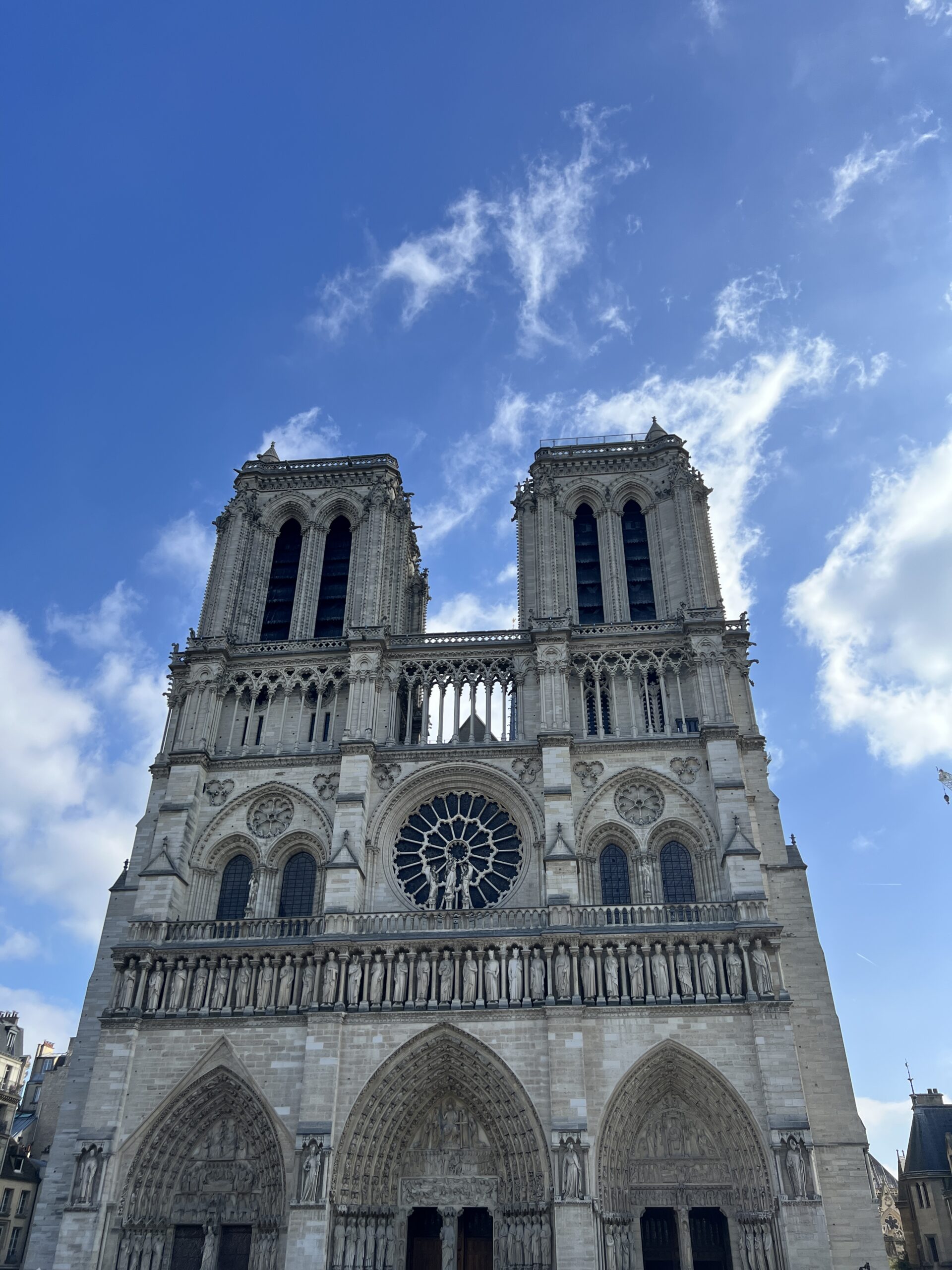
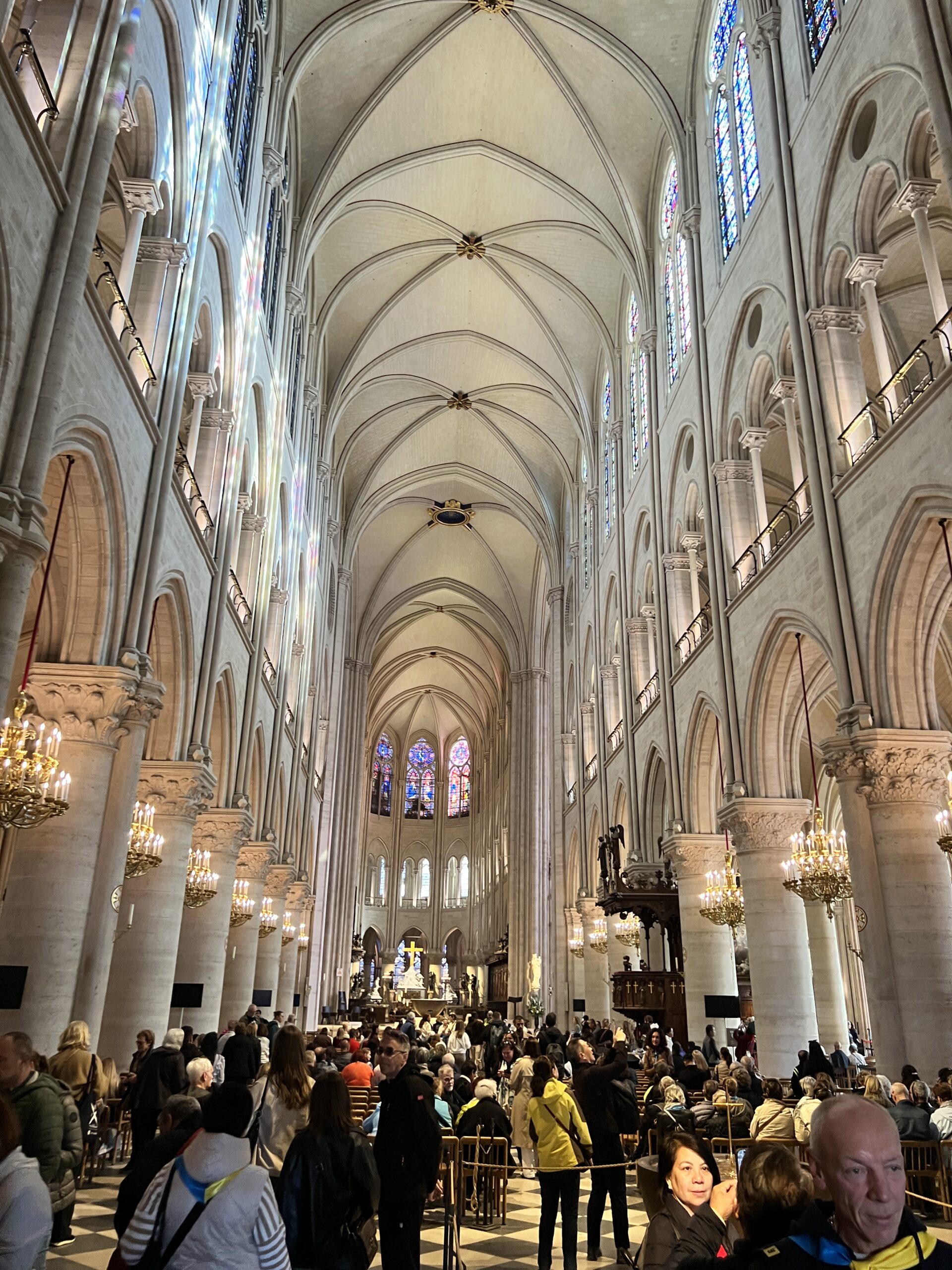
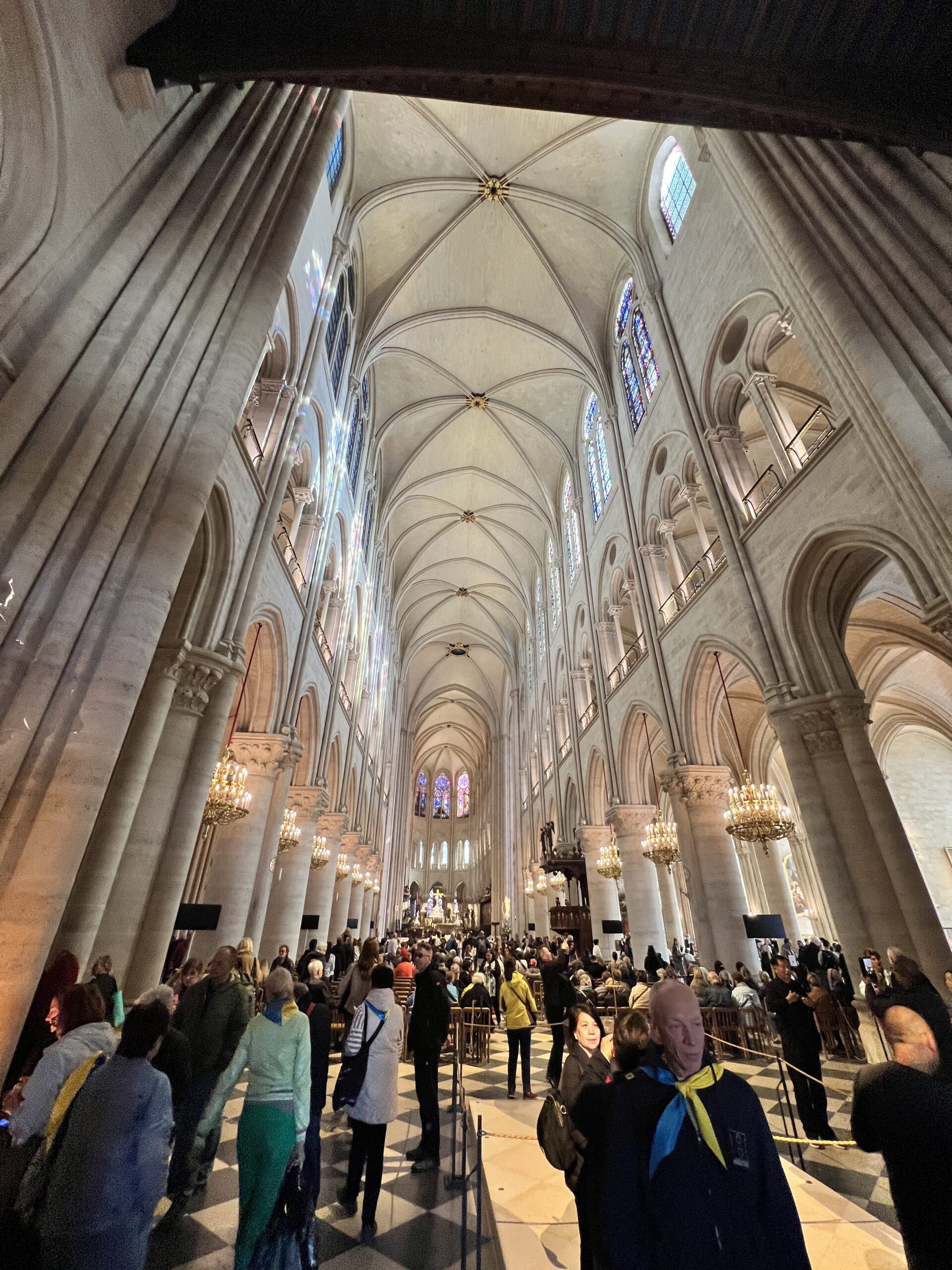
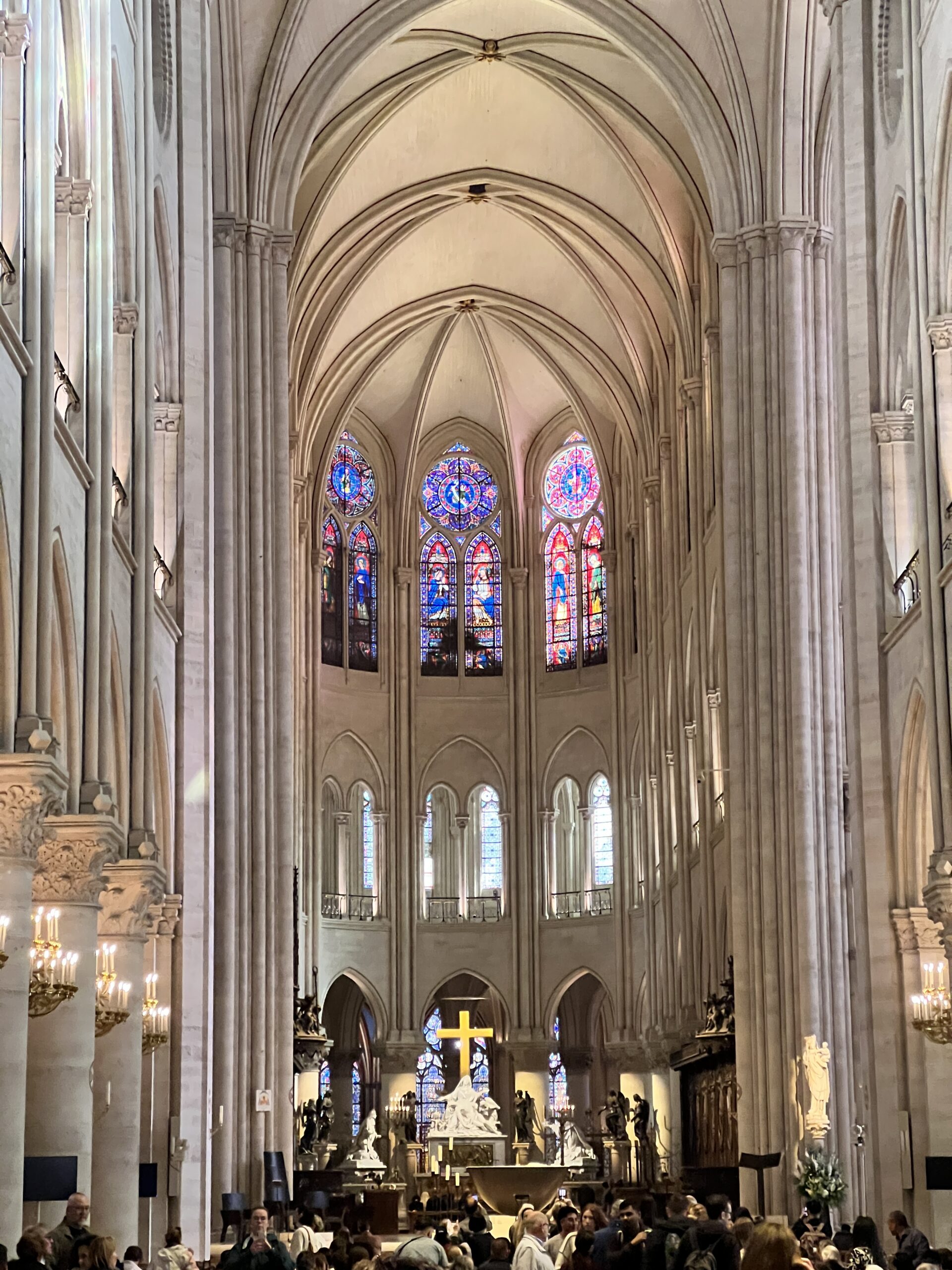
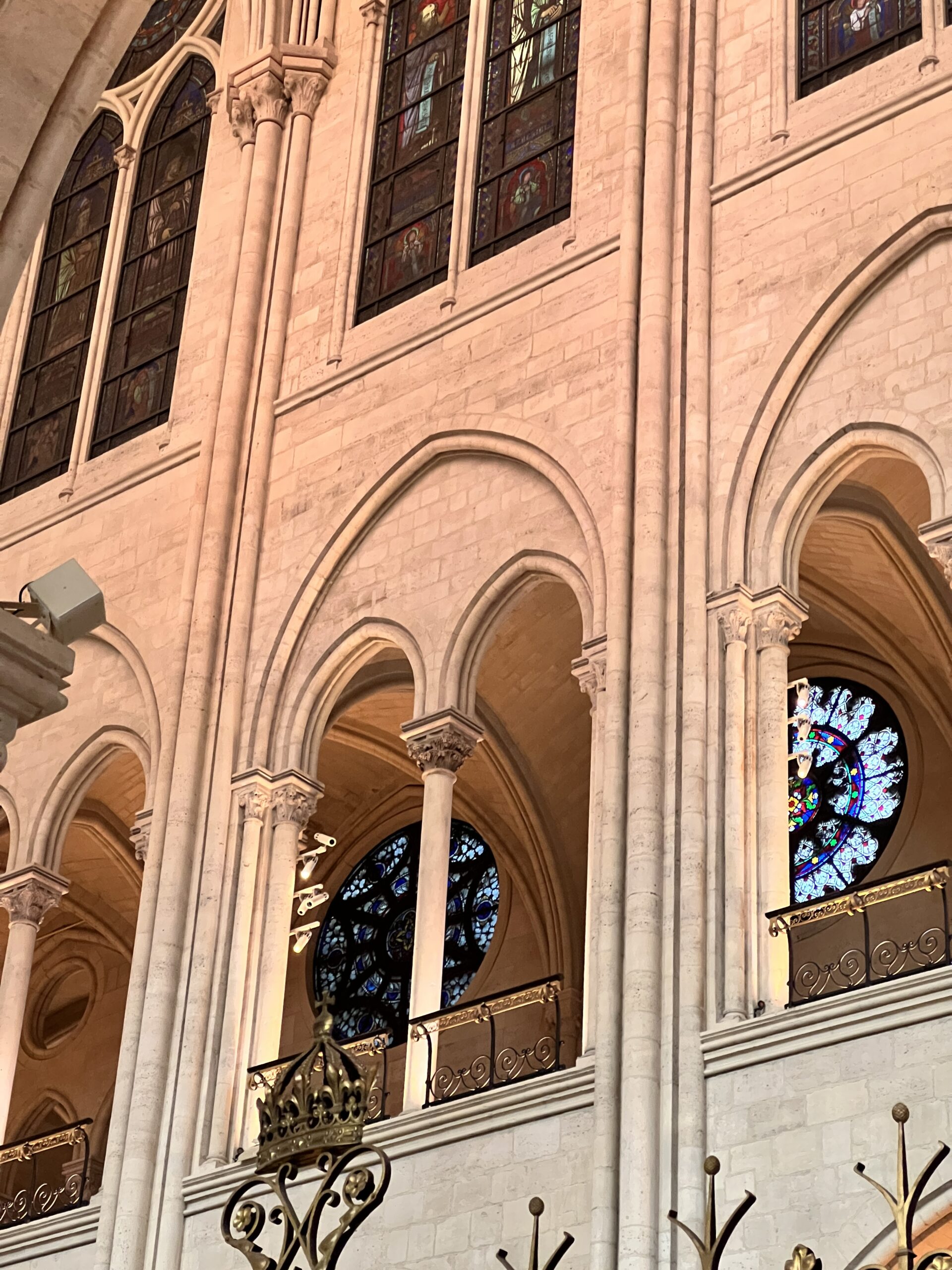
Notre-Dame de Paris is much more than a masterpiece of architecture. For almost nine centuries, its walls have also shaped a unique acoustic environment — one in which voices, music and liturgy became an essential part of the cathedral’s cultural and spiritual identity.
This animated film takes us on a journey through that sonic history. Combining scientific research, music history and digital reconstruction, it allows us to hear how Notre-Dame may have sounded at different moments in its history.
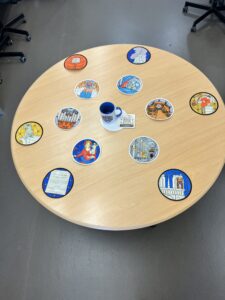
Eleven musical works, spanning from the 12th to the 20th century, are brought back into the reconstructed acoustic spaces of their respective periods. The result is a fascinating journey through time, revealing the close relationship between architecture, music and religious practice.
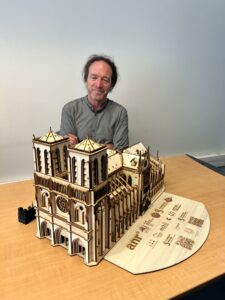
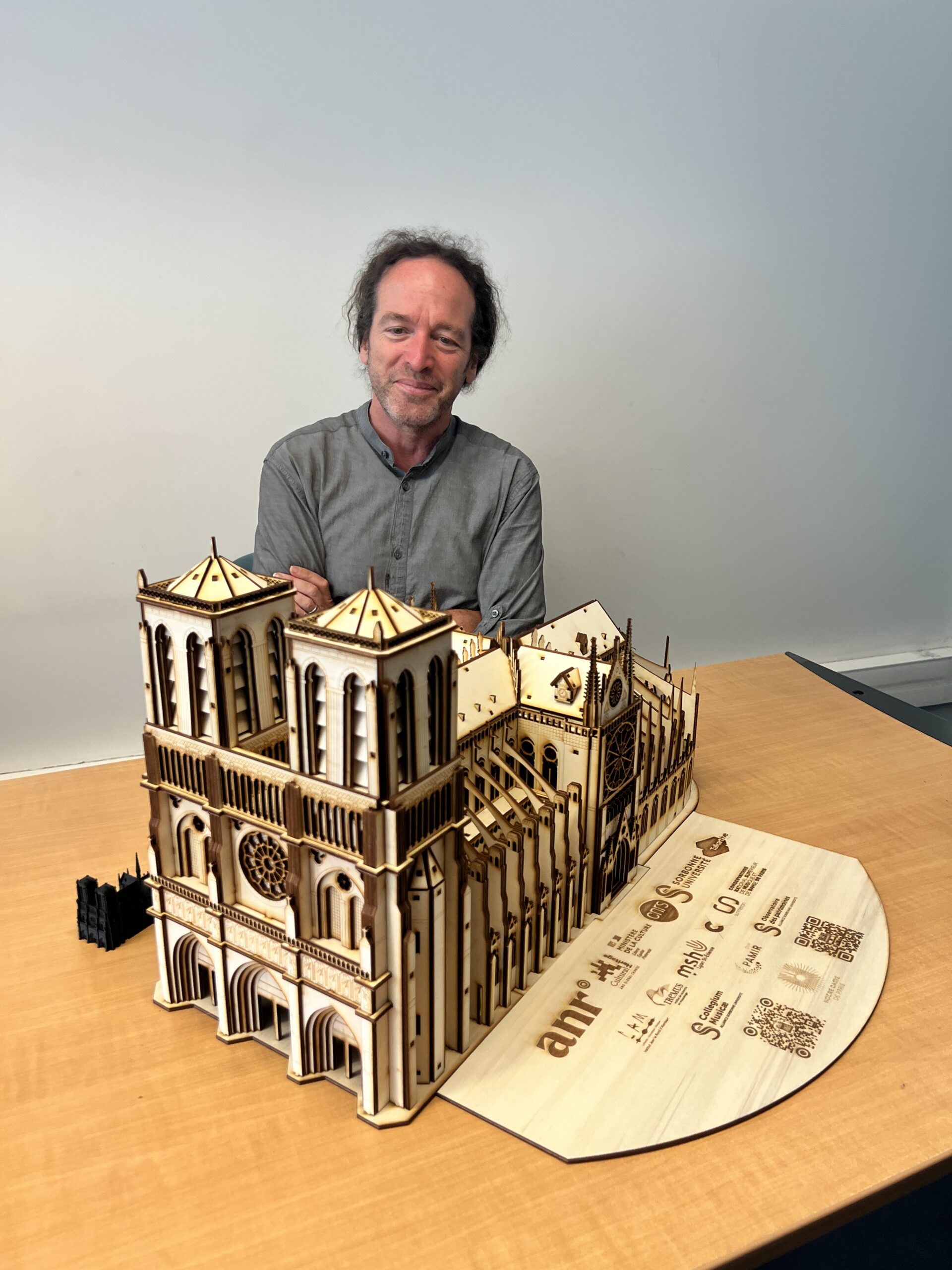
The project is part of PHEND – The Past Has Ears at Notre-Dame, a research programme dedicated to understanding and preserving the cathedral’s acoustic heritage. Among the researchers involved is acoustician Brian Katz, whose work contributes to reconstructing and studying the changing soundscape of Notre-Dame.
The film also reminds us that cultural heritage is not only something we can see. It is something we can hear, experience and remember.
After the devastating fire of 2019, the preservation of Notre-Dame’s intangible acoustic heritage has acquired a new significance. Through digital reconstruction, sounds and acoustic environments that have disappeared — or can no longer be experienced in the same way — can be studied, shared and brought back to life.
The new data are currently being analysed, and the results are expected to be published in early 2027.
So, over almost forty years, the project has evolved from a set of measurements recorded on analogue tapes into a sophisticated combination of measurements, acoustic modelling, historical reconstruction, and digital twins.
And this long-term perspective is particularly important: the goal is not simply to reproduce how Notre-Dame sounds today, but to understand, document, and preserve the acoustic history of the cathedral.
Why sound matters
Because a historic building is not simply a physical structure.
As Brian Katz has emphasized:
“Space, light, and sound naturally affect people because we perceive our
surroundings through all of our senses.”
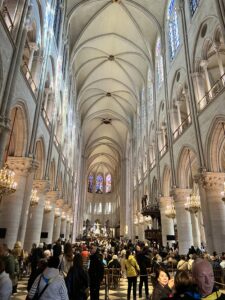
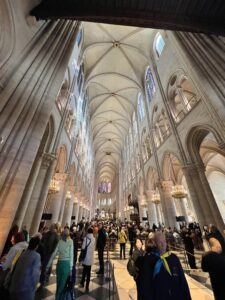
Voices were transformed by reverberation. And the listener became part of this acoustic experience.
Film : http://vaultedharmonies.pasthasears.eu/ (https://vaultedharmonies.pasthasears.dalembert.upmc.fr/)
Radio-fiction: https://alarecherchedenotredame.pasthasears.eu/ (https://alarecherchedenotredame.pasthasears.dalembert.upmc.fr/)
Audio-guide : http://ndwhispers.pasthasears.eu/ (https://whispersnd.pasthasears.dalembert.upmc.fr/portfolio/notre-dame-whispers/)
PHEND project : http://phend.pasthasears.eu/ (https://pasthasears.dalembert.upmc.fr/doku.php/phend)
PHE project : http://phe.pasthasears.eu/ (https://pasthasears.dalembert.upmc.fr/doku.php/phe)
An Interview with Brian F.G. Katz, CNRS Research Director and acoustician at the Institut Jean le Rond d’ Alembert at Sorbonne Université: https://www.sorbonne-universite.fr/en/portraits/brian-fg-katz
More than twenty years ago, the CAHRISMA project – Conservation of historical acoustic regards in interactive sound and music applications. One of the most remarkable example was Hagia Sophia in Istanbul:
“Notre-Dame Paris speaks again”, an YCBS- broadcast at Radio Chicago Internationale from Chicago
The programme on Radio Chicago Internationale is scheduled to air every day at 4:10 a.m., 5:10 a.m., 6:10 a.m., 16:10 p.m., 17:10 p.m., and 18:10 p.m. Chicago time. In Europe, these times are 7 hours later.
The programme here has been divided into three parts and will be broadcast in this schedule until the end of the month.
Radio Chicago Internationale: https://sites.google.com/view/radiochicagointernationale/programmation?fbclid=IwY2xjawVBefBleHRuA2FlbQIxMABwZG9mAWJyaWQRMHk0TmJNNnNGNG5zblVKOE1zcnRjBmFwcF9pZBAyMjIwMzkxNzg4MjAwODkyAAEepA5x5YzYAXbL5y85_C8GkdjnOjl-HSmFa3xRcqVo7H8duMpfwQQJlEc5SQ8_aem_dhmx6kkQqkiES0LT7baJ2Q